


SEND, Wellbeing and Inclusion
Make inclusion work in practice
Changing expectations around SEND and inclusion are raising the bar for FE providers. We help organisations strengthen inclusive practice, build staff capability and create learning environments in which more learners can participate, progress and succeed.

Building confidence | engaging interest | personalised support | equal opportunity

Inclusion is everyone's responsibility
Learner needs are becoming increasingly diverse, while expectations around inclusion, reasonable adjustments and effective SEND support continue to develop. The challenge is not simply having the right policies. Providers need staff who can recognise barriers, adapt teaching and create consistently inclusive experiences across the organisation.

Embedding inclusion
CPD for teachers and teaching assistants
We lead workshops on inclusive teaching, supporting learners with SEND, trauma-informed practice and whole-organisation change.
Our work helps teachers to:

Recognise barriers
Helping staff identify the factors preventing learners from participating and progressing.

Adapt teaching
Building practical approaches that respond to different needs without lowering expectations.
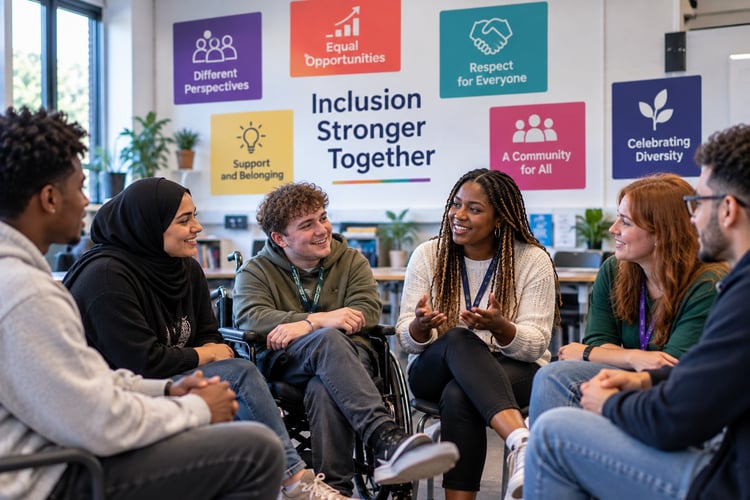
Build inclusive cultures
Moving inclusion beyond specialist teams and embed responsibility across teaching and support.
Book one of our Inclusion CPD workshops
-

Outstanding SEND provision
SEND provision can become concentrated in specialist teams rather than embedded across teaching, support and leadership. This creates inconsistent learner experiences and leaves staff uncertain about what excellent inclusive practice looks like in their own roles.
This practical workshop explores what outstanding SEND practice looks like across the learner journey, from identifying needs and removing barriers to adapting teaching and coordinating support. Using FE-focused scenarios, discussion and practical activities, staff examine their current practice and identify changes they can apply immediately within their own roles and teams.
Key takeaways
- Recognise the characteristics of outstanding SEND practice in FE.
- Identify barriers that prevent learners from participating and progressing.
- Strengthen reasonable adjustments and inclusive teaching approaches.
- Develop greater consistency between curriculum, SEND and support teams.
- Identify practical priorities for improving SEND provision.
Online | 2 hours | £399.00 | up to 30 delegates
In-person | 3 hours / 5 hours | £599/ £950.00 | up to 30 delegates
-
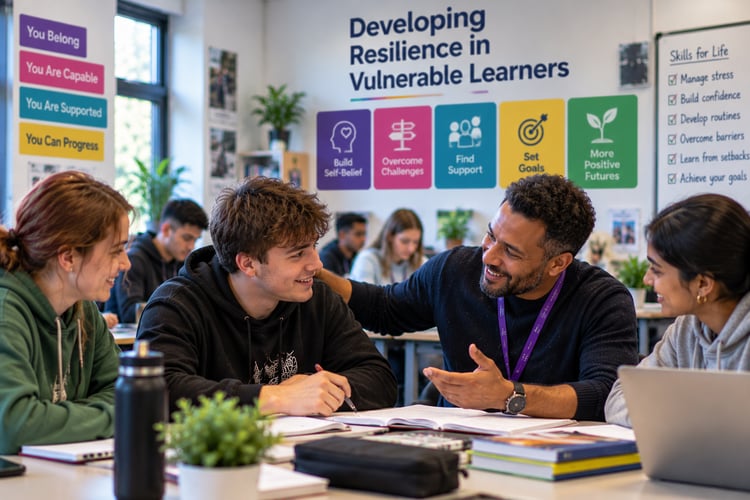
Developing Resilience in Vulnerable Learners
Some learners face significant personal, social or educational barriers that affect confidence, attendance, engagement and persistence. Staff need practical ways to build resilience without lowering expectations or creating dependency.
Through practical activities, learner scenarios and discussion, participants explore how everyday interactions can strengthen confidence, independence and persistence. The workshop introduces approaches to goal-setting, responding to setbacks, building positive routines and helping learners recognise their own progress, with a strong emphasis on strategies staff can use immediately.
Key takeaways
- Recognise factors that can undermine learner confidence and resilience.
- Use practical strategies to help learners manage challenge and setbacks.
- Support learners to set achievable goals and recognise progress.
- Build independence, self-belief and help-seeking behaviours.
- Create supportive relationships while maintaining appropriate professional boundaries.
Online | 2 hours | £399.00 | up to 30 delegates
In-person | 3 hours / 5 hours | £599/ £950.00 | up to 30 delegates
-
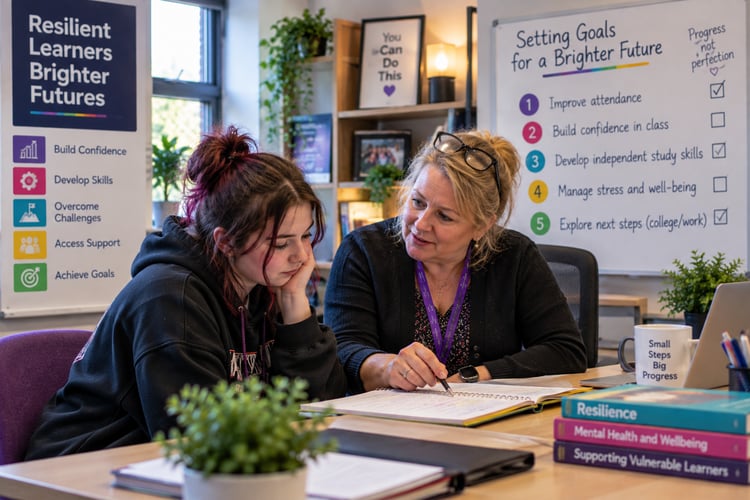
Trauma-Informed Practice
Experiences of trauma can affect behaviour, relationships, emotional regulation and engagement with learning. Without understanding this, staff may interpret learner responses simply as poor behaviour, disengagement or lack of motivation.
This accessible workshop helps staff understand the principles of trauma-informed practice without expecting teachers to become therapists. Participants work through realistic FE situations and explore practical approaches to communication, routines, relationships, boundaries and responding to distress. The emphasis throughout is on creating safer learning environments while maintaining appropriate expectations.
Key takeaways
- Understand how trauma can influence learning, behaviour and relationships.
- Recognise potential responses to stress without attempting to diagnose learners.
- Create greater psychological safety through predictable and respectful practice.
- Respond to challenging situations in ways that reduce rather than escalate distress.
- Maintain high expectations alongside appropriate support and boundaries.
Online | 2 hours | £399.00 | up to 30 delegates
In-person | 3 hours / 5 hours | £599/ £950.00 | up to 30 delegates
-

Creating an Inclusive Organisation
Inclusion cannot depend on individual enthusiastic staff or specialist teams. Learners experience the whole organisation — its curriculum, environment, communications, systems, culture and relationships. Gaps between these can create barriers even where classroom practice is strong.
Designed for teams who want to move from individual inclusive practices towards a genuinely inclusive organisational culture, this workshop examines the learner experience across the college. Participants consider curriculum, teaching, support, physical and digital environments, communication, learner voice and organisational culture before identifying practical priorities for improvement.
Key takeaways
- Understand inclusion as a whole-organisation responsibility.
- Identify cultural, organisational and environmental barriers to participation.
- Strengthen learner voice, belonging and representation.
- Connect curriculum, support, leadership and wider college services.
- Develop practical actions for embedding inclusion throughout the learner experience.
Online | 2 hours | £399.00 | up to 30 delegates
In-person | 3 hours / 5 hours | £599/ £950.00 | up to 30 delegates
-
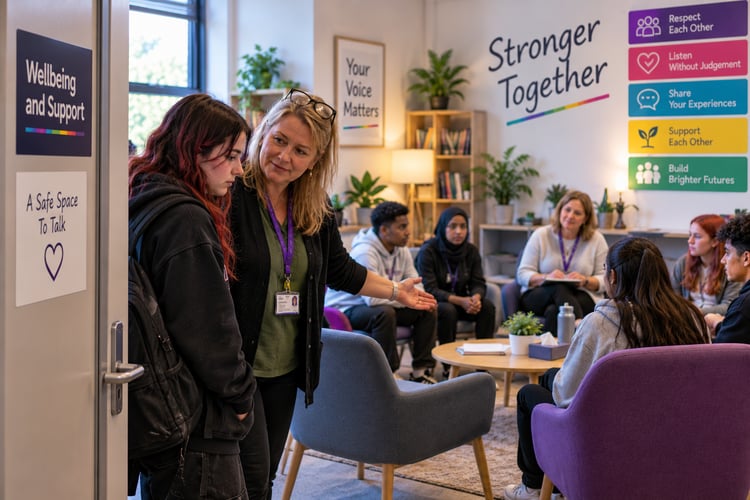
Developing a Safeguarding Culture
Safeguarding is more than policies, referrals and regulatory compliance. Effective safeguarding depends upon a culture in which learners feel safe, staff notice concerns, people know how to respond and reporting concerns is part of everyday professional practice.
This interactive workshop moves safeguarding beyond annual compliance training and considers what a strong safeguarding culture looks like in everyday college life. Through scenarios, discussion and practical activities, participants explore professional curiosity, psychological safety, reporting, escalation, respectful relationships and the behaviours that enable learners to speak up when something is wrong.
Key takeaways
- Understand the difference between safeguarding compliance and safeguarding culture.
- Strengthen psychological safety, professional curiosity and respectful relationships.
- Recognise concerns and respond appropriately.
- Build staff confidence around reporting and escalation.
- Connect safeguarding, wellbeing, inclusion and learner support.
- Identify practical ways to make safeguarding everyone's responsibility.
Online | 2 hours | £399.00 | up to 30 delegates
In-person | 3 hours / 5 hours | £599/ £950.00 | up to 30 delegates
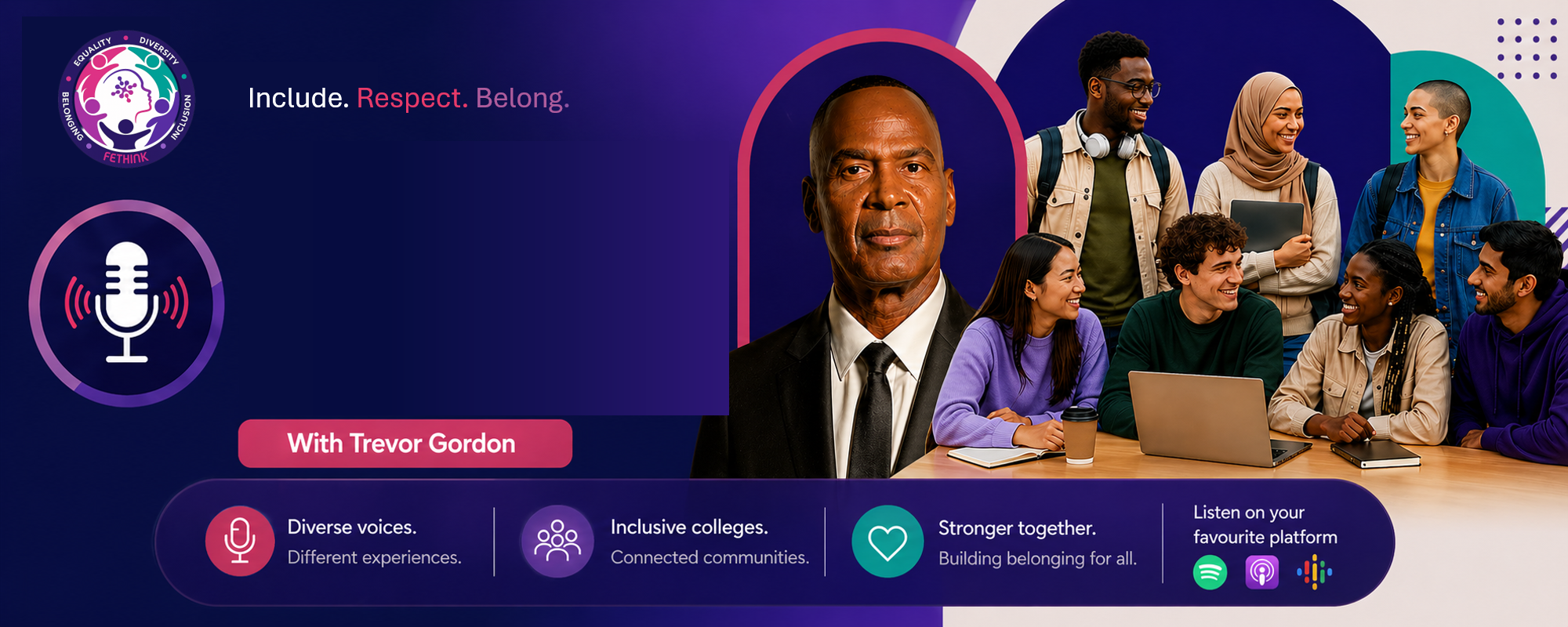
My Journey
EDIB podcast series

Conversations about the triumphs, challenges and career landmarks of those who work and lead in the Further Education sector.

Is inclusion your priority?
Whether you have a coming inspection, a post-inspection action plan to implement or are planning a major cultural change, we can help you achieve your objectives.
